Strange Facts

It takes 17 muscles to smile & 43 to frown
OSTRICH eats pebbles to help digestion by grinding up the ingested food
When you sneeze air rushes out your nose at a rate of 100 miles per hour
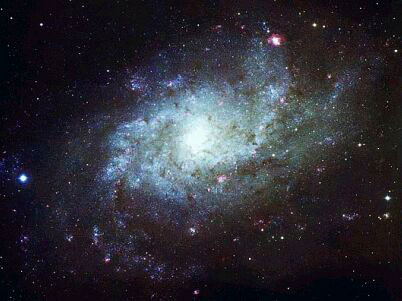
The cosmos contains approximately 50,000,000,000 galaxies
Owl is the only bird, which can rotate its head to 270 degrees
Buddha delivered his first sermon at Sarnath
Hummingbirds are the only animal that can also fly backwards
A 15 letter word that can be spelled without repeating a letter is uncopyrightable
8.7 million of United State residents who were born in Asia.
KIWIS are the only birds, which hunt by sense of smell
Dolphins sleep with one eye open
Bats always turn left when exiting a cave
Cat’s urine glows under a black light
Bird Feeding: Do not feed avocado as it is toxic to birds
Vitamin K is necessary for clotting of blood
A Blue Whale can eat as much as 3 tones of food everyday, but at the same time can live without food for 6 months

Jupiter – The Planet

Jupiter is the fifth planet from the Sun and is the largest planet in the solar system. If Jupiter were hollow, more than one thousand Earths could fit inside. It also contains two and a half times the mass of all the other planets combined.
It has a mass of 1.9 x 1027 kg and is 142,800 kilometers  across the equator. Jupiter possesses 62 known satellites. The four largest are Callisto, Europa, Ganymede and Io, and were named after Galileo Galilei who observed them as long ago as 1610. The German astronomer Simon Marius claimed to have seen the moons around the same time, but he did not publish his observations and so Galileo is given the credit for their discovery.
Jupiter has a very faint ring system, but is totally invisible from the Earth.  The atmosphere is very deep, perhaps comprising the whole planet, and is somewhat like the Sun. It is composed mainly of hydrogen and helium, with small amounts of methane, ammonia, water vapor and other compounds. At great depths within Jupiter, the pressure is so great that the hydrogen atoms are broken up and the electrons are freed so that the resulting atoms consist of bare protons. This produces a state in which the hydrogen becomes metallic.
Auroral emissions, similar to Earth’s northern lights, were observed in the polar regions of Jupiter. The auroral emissions appear to be related to material from Io that spirals along magnetic field lines to fall into Jupiter’s atmosphere. Cloud-top lightning bolts, similar to superbolts in Earth’s high atmosphere, were also observed.
Jupiter Statistics
Mass (kg) : 1.900e+27
Equatorial radius (km) : 71,492
Mean distance from the Sun (km) : 778,330,000
Rotational period (days) : 0.41354
Orbital period (days) : 4332.71
Tilt of axis (degrees) : 3.13
Orbital inclination (degrees) : 1.308
Magnitude (Vo) -2.70
Mean cloud temperature : -121°C
Atmospheric pressure (bars) : 0.7
Atmospheric composition:
Hydrogen : 90%
Helium : 10%

Veenai

Veenai is a popular Carnatic music instrument that is said to be many centuries old. Western music scholars believe that the instrument has many characteristics that belong to European style lute. The Veenai has many discrepancies in sound and shape it has been customized and improvised over the decades to create a unique style from the lute.
This 1.5 meter long instrument has two drones on both the side to give it an even balance and is connected with four different strings along with frets that give different harmonics than any other music device. Veenai being an age old musical instrument holds religious importance and also symbolizes ancient culture and heritage in southern India.
History of Instrument
The history of Veenai dates back to the Vedic period which is about 1500BCE. The legend states that it all began when a hunter first discovered a different sound from his bow when it began to vibrate. The curious hunter tried various grass roots and animal fiber to create music, which in turn gave birth to the formation of Veena.
Once the basic structure of the Veenai was formed, further changes took place to bring about a distinctive sound. In the olden days this instrument had very few frets but today the Sarswathi Veenai is said to have 24 frets on it. Besides this, the instrument also has religious association, as it has been described in many sacred texts that as goddess Sarawati playing this instrument. She is also represented as the Goddess of Knowledge.

Types
- Saraswati Veena
- Rudra Veena
- Vichitra Veena
Kolkata craftsmen have been well known for creating the best Saraswati Veenai and Thanjavur artisans are famous for producing some of the finest Rudra Veenai and Vichitra Veenai in the world.
There are many modern day versions to it such as Ranjan Veenai and Mohan Veena. While the former looks similar to the sitar, the latter has a close resemblance to the guitar.

Famous Veenai Players
Veenai Ranganayaki Rajagopalan, Veenai Dhanammal, Rugmini Gopalakrishnan, Doraiswamy Iyengar, Veene Sheshanna, Veenai Venkatagiriappa, Emani Sankara Sastry, Chitti Babu, Rajhesh Vaidhya and so on.

Fundamental Rights

Fundamental Rights is a charter of rights contained in the Constitution of India. It guarantees civil liberties such that all Indians can lead their lives in peace and harmony as citizens of India. These include individual rights common to most liberal democracies, such as equality before law, freedom of speech and expression, freedom of association and peaceful assembly, freedom to practice religion, and the right to constitutional remedies for the protection of civil rights by means of writs such as habeas corpus.
The Fundamental Rights are defined as basic human freedoms which every Indian citizen has the right to enjoy for a proper and harmonious development of personality. These rights universally apply to all citizens, irrespective of race, place of birth, religion, caste, creed, color or Gender. They are enforceable by the courts, subject to certain restrictions. The seven fundamental rights recognised by the constitution are:
1. Right to equality, including equality before law, prohibition of discrimination on grounds of religion, race, caste, sex or place of birth, and equality of opportunity in matters of employment
2. Right to freedom of speech and expression, assembly, association or union, movement, residence, and right to practice any profession or occupation (some of these rights are subject to security of the State, friendly relations with foreign countries, public order, decency or morality)
3. Right against exploitation, prohibiting all forms of forced labour, child labour and traffic in human beings;
4. Right to freedom of conscience and free profession, practice, and propagation of religion;
5. Right of any section of citizens to conserve their culture, language or script, and right of minorities to establish and administer educational institutions of their choice; and
6. Right to constitutional remedies for enforcement of Fundamental Rights.
7. Right to education
Fundamental rights for Indians have also been aimed at overturning the inequalities of pre-independence social practices. Specifically, they have also been used to abolish untouchability and hence prohibit discrimination on the grounds of religion, race, caste, sex, or place of birth.

Floppy Disk

A floppy disk is a disk storage medium composed of a disk of thin and flexible magnetic storage medium, sealed in a rectangular plastic carrier lined with fabric that removes dust particles. They are read and written by a floppy disk drive (FDD).


Invented by IBM, floppy disks in 3.5-inch, 5.25-inch and 8-inch forms were a ubiquitous form of data storage and exchange from the mid-1970s to the 2000s.
While floppy disk drives still have some limited uses, especially with legacy industrial computer equipment, they have been superseded by data storage methods with much greater capacity, such as USB flash drives, portable external hard disk drives, optical discs, memory cards, and computer networks.
The earliest floppy disks, invented in the late 1960s, were 8 inches in diameter; they became commercially available in 1971. These disks and associated drives were produced and improved upon by IBM and other companies such as Memorex, Shugart Associates, and Burroughs Corporation. The term “floppy disk” appeared in print as early as 1970, and although in 1973 IBM announced its first media as “Type 1 Diskette” the industry continued to use the terms “floppy disk” or “floppy”.

Types of Floppy Disks
  • 5.25 Inch Floppy Disk are not commonly found anymore. They are used by older computers
  • 3.5 Inch Floppy Disk are the most commonly used disk. It is encased in a hard plastic square case that cannot be opened. Information is magnetically recorded onto this thin flexible round disk.

Floppy Capacity
Floppies can be found in two storage capacities. They are high density disks and double-density disks.
Double-Density Disks (720K capacity) store the least amount of information. They are still used, but not as common as the high density disks. It is referred to with the letters DD on the label. With only one hole at the top of the disk, it can store 720K of information.
High-Density Disks (1.44K capacity) store the most information. Having two holes at the top of the disk, it can store 1.44 MB of information. It usually has the letters HD written on it. This is the most commonly used floppy disk.

Pearl Harbor Attack

Date: December 7, 1941
Location: Primarily Pearl Harbor, Hawaii Territory, United States
Result:  Japanese major tactical victory,  United States declaration of war on the Empire of Japan and Nazi German and fascist Italian declaration of war on the United States.
The attack on Pearl Harbor (called Hawaii Operation or Operation AI by the Japanese Imperial General Headquarters (Operation Z in planning) and the Battle of Pearl Harbor) was a surprise military strike conducted by the Imperial Japanese Navy against the United States naval base at Pearl Harbor, Hawaii, on the morning of December 7, 1941 (December 8 in Japan). The attack was intended as a preventive action in order to keep the U.S. Pacific Fleet from interfering with military actions the Empire of Japan was planning in Southeast Asia against overseas territories of the United Kingdom, the Netherlands, and the United States.
The base was attacked by 353 Japanese fighters, bombers and torpedo planes in two waves, launched from six aircraft carriers. Four U.S. Navy battleships were sunk (two of which were raised and returned to service later in the war) and the four others present were damaged. The Japanese also sank or damaged three cruisers, three destroyers, an anti-aircraft training ship, and one minelayer. 188 U.S. aircraft were destroyed; 2,402 Americans were killed and 1,282 wounded. The power station, shipyard, maintenance, and fuel and torpedo storage facilities, as well as the submarine piers and headquarters building (also home of the intelligence section) were not attacked. Japanese losses were light: 29 aircraft and five midget submarines lost, and 65 servicemen killed or wounded. One Japanese sailor was captured.
The attack came as a profound shock to the American people and led directly to the American entry into World War II in both the Pacific and European theaters. The following day (December 8th) the United States declared war on Japan. Domestic support for isolationism, which had been strong, disappeared. Clandestine support of Britain (for example the Neutrality Patrol) was replaced by active alliance. Subsequent operations by the U.S. prompted Germany and Italy to declare war on the U.S. on December 11, which was reciprocated by the U.S. the same day.
Despite numerous historical precedents for unannounced military action by Japan, the lack of any formal warning, particularly while negotiations were still apparently ongoing, led President Franklin D. Roosevelt to proclaim December 7, 1941, “a date which will live in infamy“.

Steve Jobs

Name: Steven Paul Jobs
Born: February 24, 1955 at San Francisco, California, U.S.
Died : October 5, 2011 at Palo Alto, California, U.S.
Occupation: Chairman, Apple Inc.
Years active: 1974–2011
Net worth:  $8.3 billion (2011)
Board member of The Walt Disney Company, Apple, Inc.
Religion: Buddhism
Spouse: Laurene Powell Jobs
Children: 4
Relatives: Mona Simpson (sister)
Steven Paul “Steve” Jobs was an American computer entrepreneur and inventor. He was co-founder,chairman, and chief  executive officer of Apple Inc. Jobs also previously served as chief executive of Pixar Animation Studios; he became a member of the board of directors of The Walt  Disney Company in 2006, following the acquisition of Pixar by Disney. He was credited in Toy Story (1995) as an executive producer.
In the late 1970s, Jobs, with Apple co-founder Steve Wozniak, Mike Markkula, and others, designed, developed, and marketed one of the first commercially  successful lines of personal computers, the Apple II series. In the early 1980s, Jobs was among the first to see the commercial potential of Xerox PARC’s mouse- driven graphical user interface, which led to the creation of the Macintosh. After losing a power struggle with the board of directors in 1985, Jobs resigned from  Apple and founded NeXT, a computer platform development company specializing in the higher-education and business markets. Apple’s subsequent 1996 buyout of  NeXT brought Jobs back to the company he co-founded, and he served as its CEO from 1997 until 2011.
In 1986, he acquired the computer graphics division of Lucasfilm Ltd which was spun off as Pixar Animation Studios. He remained CEO and majority shareholder at  50.1 percent until its acquisition by The Walt Disney company in 2006. Consequently Jobs became Disney’s largest individual shareholder at 7 percent and a member  of Disney’s Board of Directors.
On August 24, 2011, Jobs announced his resignation from his role as Apple’s CEO. In his letter of resignation, Jobs strongly recommended that the Apple executive  succession plan be followed and Tim Cook be named as his successor. Per his request, Jobs was appointed chairman of Apple’s board of directors. On October 5,  2011, Apple announced that Jobs had died. He was 56 years old.

Company Name Origin / Meaning


Company Name Origin / Meaning
 
1. Mercedes - Name of the daughter of the founder 
2. Nokia - Name of city in Finland

3. Pepsi - Named from the digestive enzyme pepsin 
4. Honda - From the name of its founder Soichiro Honda 
5. Sony - from the Latin word 'sonus'meaning sound 
6. Maggi - Food company named after its founder, Julius Maggi
7. Suzuki - From the name of its founder, Michio Suzuki
8. Samsung - Meaning 'three stars' in Korean
9. Toyota - From the name of founder, Sakichi Toyoda
10. Yamaha - After Torakusu Yamaha, who founded the company

11. Adidas - From the name of the founder Adolf (Adi) Dassler. (das)

Panda

The giant panda, or panda (Ailuropoda melanoleuca, literally meaning “black and white cat-foot”) is a bear native to central-western and south western China. It is easily recognized by its large, distinctive black patches around the eyes, over the ears, and across its round body.


Though it belongs to the order Carnivora, the panda’s diet is 99% bamboo. Pandas in the wild will occasionally eat other grasses, wild tubers, or even meat in the form of birds, rodents or carrion. In captivity they may receive honey, eggs, fish, yams, shrub leaves, oranges, or bananas along with specially prepared feed.
The giant panda lives in a few mountain ranges in central China, mainly in Sichuan province, but also in the Shaanxi and Gansu provinces. Due to farming, deforestation and other development, the panda has been driven out of the lowland areas where it once lived.
The panda is a conservation reliant endangered species. A 2007 report shows 239 pandas living in captivity inside China and another 27 outside the country. Wild population estimates vary; one estimate shows that there are about 1,590 individuals living in the wild, while a 2006 study via DNA analysis estimated that this figure could be as high as 2,000 to 3,000. Some reports also show that the number of pandas in the wild is on the rise. However, the IUCN does not believe there is enough certainty yet to reclassify the species from Endangered to Vulnerable.
While the dragon has historically served as China’s national emblem, in recent decades the panda has also served as an emblem for the country. Its image appears on a large number of modern Chinese commemorative silver, gold, and platinum coins. Though the panda is often assumed to be docile, it has been known to attack humans, presumably out of irritation rather than predation.

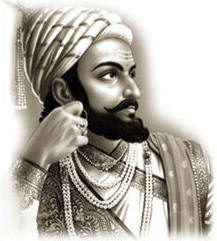
Chatrapati Shivaji

Name: Chatrapati Shivaji Maharaj
Full name: Shivaji Bhosle
Titles: Kshatriya Kulavataunsha
Born: 19 February 1627
Birthplace: Shivneri Fort, near Pune, India
Died: 3 April 1680, Tuesday
Place of death: Raigad Fort
Successor : Sambhaji
Wives: Sai bai, Soyarabai, Putalabai, Laxmibai, Kashibai, Sagunabai, Gunvantibai and Sakavaarbai
Offspring: Sambhaji, Rajaram, and six daughters Sakhubai Nimbalkar, Ranubai Jadhav, Ambikabai Mahadik, Deepabai, Rajkunvarbai Shirke, Kamlabai Palkar.
Father: Shahaji
Mother; Jijabai
Religious beliefs: Hinduism


Shivaji Raje Bhosle, with the royal title Chhatrapati Shivaji Maharaj, was a Maratha aristocrat of the Bhosle clan who founded the Maratha empire. Shivaji led a resistance to free the Maratha kingdom from the Sultanate of Bijapur, and establish Hindavi Swarajya (“self-rule of Hindu people”).
He created an independent Maratha kingdom with Vedant Raigad as its capital, and successfully fought against the Mughals to defend his kingdom. He was crowned as Chhatrapati (“sovereign“) of the Maratha kingdom in 1674.
He achieved the re-establishment of Hindu rule in the region after being ruled and dominated by various foreign Muslim dynasties for several hundred years. He established a competent and progressive civil rule with the help of a well-regulated and disciplined military and well-structured administrative organizations.
The prevalent practices of treating women as spoils of war, destruction of religious monuments, slavery and forceful religious conversions were firmly opposed under his administration. Shivaji was a religious Hindu.
He also innovated rules of military engagement, pioneering the “Shiva sutra” or ganimi kava (guerrilla tactics), which leveraged strategic factors like geography, speed, surprise and focused pinpoint attacks to defeat his larger and more powerful enemies and built many sea-forts.

Strange Facts


Every person has a unique tongue print.
Giraffes have no vocal cords.
Mosquitoes have teeth.
A goldfish has a memory span of three seconds.
Penguins can jump as high as 6 feet in the air.
The average person has over 1,460 dreams a year.
Rubber bands last longer when refrigerated.
Most lipstick contains fish scales.
The elephant is the only mammal that can’t jump.
A cockroach can live several weeks with its head cut off.
A jellyfish is 95 percent water.
Almonds are a member of the peach family.
The penguin is the only bird who can swim, but not fly.
Ancient Egyptians slept on pillows made of stone.

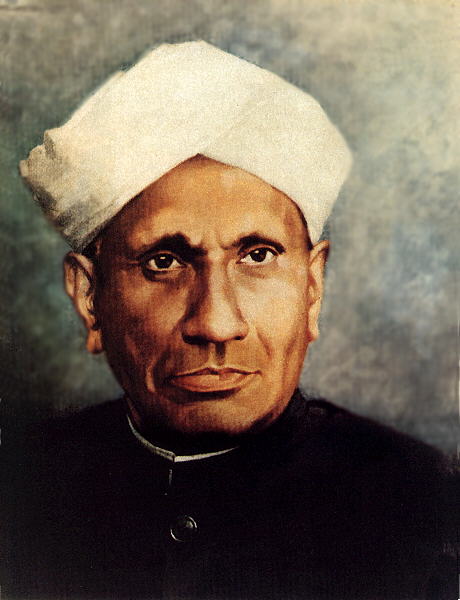
Raman Effect

Raman scattering or the Raman effect is the inelastic scattering of a photon. It was discovered by Sir Chandrasekhara Venkata Raman and Kariamanickam Srinivasa Krishnan in liquids, and by Grigory Landsberg and Leonid Mandelstam in crystals.
When light is scattered from an atom or molecule, most photons are elastically scattered (Rayleigh scattering), such that the scattered photons have the same energy (frequency) and wavelength as the incident photons.
However, a small fraction of the scattered light (approximately 1 in 10 million photons) is scattered by an excitation, with the scattered photons having a frequency different from, and usually lower than, the frequency of the incident photons. In a gas, Raman scattering can occur with a change in vibrational or rotational energy of a molecule. Chemists are concerned primarily with the vibrational Raman effect.
The inelastic scattering of light was predicted by Adolf Smekal in 1923 (and in German-language literature it may be referred to as the Smekal-Raman effekt). In 1922, Indian physicist C. V. Raman published his work on the “Molecular Diffraction of Light,” the first of a series of investigations with his collaborators which ultimately led to his discovery (on 28 February 1928) of the radiation effect which bears his name.
The Raman effect was first reported by C. V. Raman and K. S. Krishnan, and independently by Grigory Landsberg and Leonid Mandelstam, in 1928. Raman received the Nobel Prize in 1930 for his work on the scattering of light. In 1998 the Raman effect was designated an ACS National Historical Chemical Landmark in recognition of its significance as a tool for analyzing the composition of liquids, gases, and solids.

UNESCO

Org type: Specialized Agency
Acronyms: UNESCO
Established: 16 November 1945
Headquarters: Paris, France
Website: www.UNESCO.org

The United Nations Educational, Scientific and Cultural Organization is a specialized agency of the United Nations. Its stated purpose is to contribute to peace and security by promoting international collaboration through education, science, and culture in order to further universal respect for justice, the rule of law, and the human rights along with fundamental freedoms proclaimed in the UN Charter. It is the heir of the League of Nations’ International Commission on Intellectual Cooperation.
UNESCO has 193 Member States and seven Associate Members. Most of the field offices are “cluster” offices covering three or more countries; there are also national and regional offices.
UNESCO pursues its objectives through five major programs: education, natural sciences, social and human sciences, culture, and communication and information.
Projects sponsored by UNESCO include literacy, technical, and teacher-training programmes; international science programmes; the promotion of independent media and freedom of the press; regional and cultural history projects; the promotion of cultural diversity; international cooperation agreements to secure the world cultural and natural heritage and to preserve human rights, and attempts to bridge the worldwide digital divide. It is also a member of the United Nations Development Group.

World War I

World War I (WWI), which was predominantly called the World War or the Great War from its occurrence until 1939, and the First World War or World War I thereafter, was a major war centred in Europe that began on 28 July 1914 and lasted until 11 November 1918. It involved all the world’s great powers, which were assembled in two opposing alliances: the Allies (centred around the Triple Entente) and the Central Powers (originally centred around the Triple Alliance). More than 70 million military personnel, including 60 million Europeans, were mobilised in one of the largest wars in history. More than 9 million combatants were killed, largely because of great technological advances in firepower without corresponding advances in mobility. It was the sixth deadliest conflict in world history.
It was a war that began with an assassination and ended with a series of revolutions. The assassination on 28 June 1914 of Archduke Franz Ferdinand of Austria, the heir to the throne of Austria-Hungary, was the proximate trigger of the war. Long-term causes, such as imperialistic foreign policies of the great powers of Europe, including the German Empire, the Austro-Hungarian Empire, the Ottoman Empire, the Russian Empire, the British Empire, France, and Italy, played a major role. Ferdinand’s assassination by a Yugoslav nationalist resulted in a Habsburg ultimatum against the Kingdom of Serbia. Several alliances formed over the past decades were invoked, so within weeks the major powers were at war; via their colonies, the conflict soon spread around the world.
On 28 July, the conflict opened with the Austro-Hungarian invasion of Serbia, followed by the German invasion of Belgium, Luxembourg and France; and a Russian attack against Germany. After the German march on Paris was brought to a halt, the Western Front settled into a static battle of attrition with a trench line that changed little until 1917. In the East, the Russian army successfully fought against the Austro-Hungarian forces but was forced back by the German army. Additional fronts opened after the Ottoman Empire joined the war in 1914, Italy and Bulgaria in 1915 and Romania in 1916. The Russian Empire collapsed in 1917, and Russia left the war after the October Revolution later that year. After a 1918 German offensive along the western front, United States forces entered the trenches and the Allies drove back the German armies in a series of successful offensives. Germany, which had its own trouble with revolutionaries at this point, agreed to a cease-fire on 11 November 1918, later known as Armistice Day.
By the war’s end, four major imperial powers—the German, Russian, Austro-Hungarian and Ottoman empires—had been militarily and politically defeated and ceased to exist. The successor states of the former two lost a great amount of territory, while the latter two were dismantled entirely. The map of central Europe was redrawn into several smaller states. The League of Nations was formed in the hope of preventing another such conflict. The European nationalism spawned by the war and the breakup of empires, the repercussions of Germany’s defeat and problems with the Treaty of Versailles are generally agreed to be factors in the beginning of World War II.

Stethoscope

The stethoscope is an acoustic medical device for auscultation, or listening to the internal sounds of a body. It is often used to listen to lung and heart sounds. It is also used to listen to intestines and blood flow in arteries and veins. In combination with a sphygmomanometer, it is commonly used for measurements of blood pressure. Less commonly, “mechanic’s stethoscopes” are used to listen to internal sounds made by machines, such as diagnosing a malfunctioning automobile engine by listening to the sounds of its internal parts. Stethoscopes can also be used to check scientific vacuum chambers for leaks, and for various other small-scale acoustic monitoring tasks. A stethoscope that intensifies auscultatory sounds is called phonendoscope.
History
The stethoscope was invented in France in 1816 by René Laennec at the Necker-Enfants Malades Hospital in Paris. It consisted of a wooden tube and was monaural. The first flexible stethoscope of any sort may have been a binaural instrument with articulated joints not very clearly described in 1829. In 1840, Golding Bird described a stethoscope he had been using with a flexible tube. Bird was the first to publish a description of such a stethoscope but he noted in his paper the prior existence of an earlier design (which he thought was of little utility) which he described as the snake ear trumpet. In 1851, Irish physician Arthur Leared invented a binaural stethoscope, and in 1852 George Cammann perfected the design of the instrument for commercial production, which has become the standard ever since. By 1873, there were descriptions of a differential stethoscope that could connect to slightly different locations to create a slight stereo effect, though this did not become a standard tool in clinical practice.
Several other minor refinements were made to stethoscopes, until in the early 1960s Dr. David Littmann, a Harvard Medical School professor, created a new stethoscope that was lighter than previous models and had improved acoustics. In the late 1970s, 3M-Littmann introduced the tunable diaphragm: a very hard (G-10) glass-epoxy resin diaphragm member with an overmolded silicone flexible acoustic surround which permitted increased excursion of the diaphragm member in a “z”-axis with respect to the plane of the sound collecting area. The left shift to a lower resonant frequency increases the volume of some low frequency sounds due to the longer waves propagated by the increased excursion of the hard diaphragm member suspended in the concentric accountic surround. Conversely, restricting excursion of the diaphragm by pressing the stethoscope diaphragm surface firmly against the anatomical area overlying the physiological sounds of interest, the acoustic surround could also be used to dampen excursion of the diaphragm in response to “z”-axis pressure against a concentric fret. This raises the frequency bias by shortening the wavelength to auscultate a higher range of physiological sounds. 3-M Littmann is also credited with a collapsible mold frame for sludge molding a single column bifurcating stethoscope tube with an internal septum dividing the single column stethoscope tube into discrete left and right binaural channels.
In 1999, Richard Deslauriers patented the first external noise reducing stethoscope, the DRG Puretone. It featured two parallel lumens containing two steel coils which dissipated infiltrating noise as inaudible heat energy. The steel coil “insulation” added .30 lb to each stethoscope. In 2005, DRG’s diagnostics division was acquired by TRIMLINE Medical Products.
Types of stethoscopes
- Acoustic
- Electronic
- – Recording stethoscopes
- Fetal stethoscope

Milky Way Galaxy

Observation data
Type: SBc (barred spiral galaxy)
Diameter: 100,000 light years
Thickness: 1,000 light years
Volume: 7.85 trillion cubic light years
Number of stars: 200–400 billion
Oldest known star: 13.2 billion years
Mass: 1.4×1042 kg
Sun’s distance to Galactic Center: 26,400±1,600 light years
Sun’s galactic rotation period: 250 million years (negative rotation)
Spiral pattern rotation period: 50 million years
Bar pattern rotation period: 15 to 18 million years
Speed relative to CMB rest frame: 552 km/s
The Milky Way is the galaxy that contains the Solar System. This name derives from its appearance as a dim un-resolved “milky” glowing band arching across the night sky. The term “Milky Way” is a translation of the Latin for “milky road”, Via Lactea, in turn derived from the Greek kyklos galaktikos or “milky circle”, “milk” also being the root for the Greek word for Galaxy.
The galaxy has this appearance because of the Earth’s position within the galactic plane around two thirds of the way out from the center, on the inner edge of the Orion–Cygnus Arm, with the majority of the galaxy being seen edge on. The concept of this faint band of light being made up of stars was proven in 1610 when Galileo Galilei used his telescope to resolve it into individual stars. In the 1920s observations by astronomer Edwin Hubble showed that the Milky Way was just one of around 200 billion galaxies in the observable universe.
The Milky Way is a barred spiral galaxy 100,000 light years in diameter containing 200–400 billion stars. Depending on its structure the entire galaxy has a rotational rate of 1 per 15 to 50 million years. The galaxy is also moving at a rate of 552 to 630 km per second depending on the relative frame of reference. It is estimated to be about 13.2 billion years old, nearly as old as the Universe. The Milky Way is part of the Local Group of galaxies.

Indra Nooyi

Name: Indra Nooyi
Born: 28 October 1955 (1955-10-28) (age 55) at Chennai, Tamil Nadu, India
Citizenship: United States
Education: Madras Christian College, IIM Calcutta, Yale School of Management
Occupation: Chairman & CEO of PepsiCo
Religion: Hindu
Awards: Padma Bhushan (2007)
Indra Krishnamurthy Nooyi (born 28 October 1955) is an Indian-born American business executive. She is the current Chairman and Chief Executive Officer of PepsiCo, the second largest food & beverage business in the world.
Early life and career
Indra Nooyi was born in Chennai, Tamil Nadu, India. She completed her schooling from Holy Angels AIHSS, Chennai. She received a Bachelor’s degree in Physics, Chemistry and Mathematics from Madras Christian College in 1974 and a Post Graduate Diploma in Management (MBA) from Indian Institute of Management Calcutta in 1976. Beginning her career in India, Nooyi held product manager positions at Johnson & Johnson and textile firm Mettur Beardsell. She was admitted to Yale School of Management in 1978 and earned a Master’s degree in Public and Private Management. While at Yale, she completed her summer internship with Booz & Company. Graduating in 1980, Nooyi joined the Boston Consulting Group (BCG), and then held strategy positions at Motorola and Asea Brown Boveri.
PepsiCo executive
Nooyi joined PepsiCo in 1994 and was named president and CFO in 2001. In 2007 she became the fifth CEO in PepsiCo’s 44-year history. According to BusinessWeek, since she started as CFO in 2000, the company’s annual revenues have risen 72%, while net profit more than doubled, to $5.6 billion in 2006.
Nooyi was named on Wall Street Journal’s list of 50 women to watch in 2007 and 2008, and was listed among Time’s 100 Most Influential People in The World in 2007 and 2008. Forbes named her the #3 most powerful woman in 2008. Fortune ranked her the #1 most powerful woman in business in 2009 and 2010. On the 7th of October 2010 Forbes magazine ranked her the 6th most powerful woman in the world.

Guitar

The guitar is a plucked string instrument, usually played with fingers or a pick. The guitar consists of a body with a rigid neck to which the strings, generally six in number, are attached. Guitars are traditionally constructed of various woods and strung with animal gut or, more recently, with either nylon or steel strings. Some modern guitars are made of polycarbonate materials. Guitars are made and repaired by luthiers. There are two primary families of guitars: acoustic and electric.
Acoustic guitars with hollow bodies have been in use for over a thousand years. There are three main types of modern acoustic guitar: the classical guitar, the steel-string acoustic guitar, and the archtop guitar. The tone of an acoustic guitar is produced by the vibration of the strings, which is amplified by the body of the guitar, which acts as a resonating chamber. The classical guitar is often played as a solo instrument using a comprehensive fingerpicking technique.
Electric guitars, introduced in the 1930s, rely on an amplifier that can electronically manipulate tone. Early amplified guitars employed a hollow body, but a solid body was found more suitable. Electric guitars have had a continuing profound influence on popular culture. Guitars are recognized as a primary instrument in genres such as blues, bluegrass, country, flamenco, jazz, jota, mariachi, metal, reggae, rock, soul, and many forms of pop.
Types
Acoustic guitars
- Renaissance and Baroque guitars
- Classical guitars
- Extended-range classical guitars
- Flamenco guitars
- Flat-top (steel-string) guitars
- Archtop guitars
- Selmer-Maccaferri guitars
- Resonator, resophonic or Dobro guitars
- Twelve-string guitars
- Russian guitars
- Acoustic bass guitars
- GuitarrĂ³n
- Tenor guitars
- Harp guitars
- Extended-range guitars
- Guitar battente
Electric guitars
Famous Guitarists
Jimi Hendrix, Jimmy Page, Yngwie Malmsteen, Eric Clapton, Joe Satriani, Kirk Hammett and Keith Richards and So on.

Strange Facts

A hummingbird weighs less than a penny.
Human thigh bones are stronger than concrete.
Camels have three eyelids to protect themselves from blowing sand.
It’s impossible to sneeze with your eyes open.
An ostrich’s eye is bigger than its brain.
“I am.” is the shortest complete sentence in the English language.
Most cows give more milk when they listen to music.
Owls are one of the only birds who can see the color blue.
Human teeth are almost as hard as rocks.
A giraffe can clean its ears with its 21-inch tongue.
Fingernails grow nearly 4 times faster than toenails.
Honeybees have hair on their eyes.
A shark is the only fish that can blink with both eyes.
The name Jeep came from the abbreviation used in the army for the “General Purpose” vehicle, G.P.

The Moon

The Moon is Earth’s only known natural satellite, and the fifth largest satellite in the Solar System. It is the largest natural satellite of a planet in the Solar System relative to the size of its primary, having a quarter the diameter of Earth and 1⁄81 its mass.
The Moon is the second densest satellite after Io, a satellite of Jupiter. It is in synchronous rotation with Earth, always showing the same face; the near side is marked with dark volcanic maria among the bright ancient crustal highlands and prominent impact craters.
It is the brightest object in the sky after the Sun, although its surface is actually very dark, with a similar reflectance to coal. Its prominence in the sky and its regular cycle of phases have since ancient times made the Moon an important cultural influence on language, calendars, art and mythology.
The Moon’s gravitational influence produces the ocean tides and the minute lengthening of the day. The Moon’s current orbital distance, about thirty times the diameter of the Earth, causes it to appear almost the same size in the sky as the Sun, allowing it to cover the Sun nearly precisely in total solar eclipses.
The Moon is the only celestial body on which humans have landed. While the Soviet Union’s Luna programme was the first to reach the Moon with unmanned spacecraft in 1959, the United States’ NASA Apollo program achieved the only manned missions to date, beginning with the first manned lunar orbiting mission by Apollo 8 in 1968, and six manned lunar landings between 1969 and 1972—the first being Apollo 11.
These missions returned over 380 kg of lunar rocks, which have been used to develop a detailed geological understanding of the Moon’s origins (it is thought to have formed some 4.5 billion years ago in a giant impact event involving Earth), the formation of its internal structure, and its subsequent history.
After the Apollo 17 mission in 1972, the Moon has been visited only by unmanned spacecraft, notably by the final Soviet Lunokhod rover. Since 2004, Japan, China, India, the United States, and the European Space Agency have each sent lunar orbiters.
These spacecraft have contributed to confirming the discovery of lunar water ice in permanently shadowed craters at the poles and bound into the lunar regolith. Future manned missions to the Moon have been planned, including government as well as privately funded efforts. The Moon remains, under the Outer Space Treaty, free to all nations to explore for peaceful purposes.